
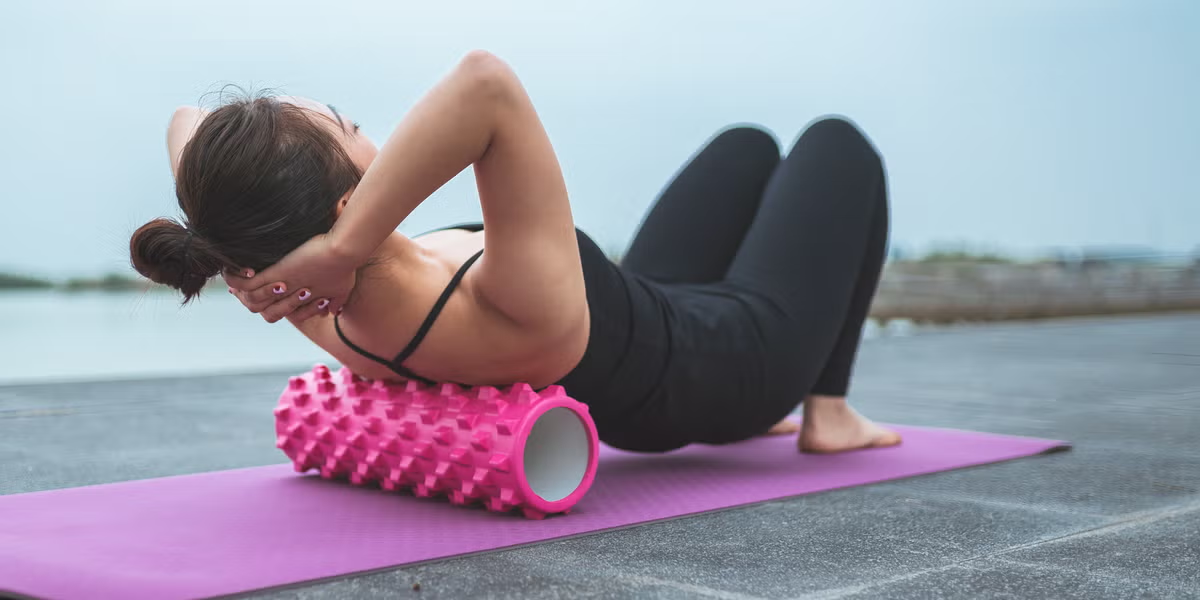
A solid recovery routine is the key to making progress in any fitness journey. After all the heavy lifting, cardio, or high-intensity intervals, the body needs rest, but not just sleep. Active recovery tools, especially recovery mats, can make a significant difference in how quickly and comfortably I bounce back. I’ve tried a wide variety of recovery accessories, but one tool I come back to over and over again is the recovery mat. Whether it’s a yoga mat, infrared therapy mat, or acupressure mat, having the right one under me changes how my body responds after a training session.
Learning what to look for in a recovery mat for post-workout took some trial and error. Not all mats are created equal. Some are too thin, others don’t stay in place, and many don’t offer the muscle support or therapeutic value needed after pushing hard in the gym. A good mat needs to support muscle decompression, promote blood flow, encourage stretching, and if possible, integrate extra features like heat or acupressure. I’ve figured out what makes a recovery mat truly worth the investment, and in this article, I’ll break it all down so you can make an informed decision for your post-training needs.
If you’re in the market for one and unsure what features matter most, here’s what to look for in a recovery mat for post-workout that will help you reduce soreness, prevent injury, and restore your energy.
Material and Density: Support Matters
One of the first things I check is the mat’s density. A recovery mat should not feel like you’re lying on the floor. I’ve used mats that were too soft and felt like a bed sheet, and others that were so dense they made stretching painful. Ideally, you want a high-density foam or layered construction that supports your joints, especially if you’re using it on a hard surface.
Thickness plays a big role here too. A mat in the range of 6mm to 10mm tends to offer enough cushioning without being too bulky. If you’re planning on doing stretching, mobility drills, or bodyweight movements like planks or glute bridges, it should be thick enough to protect your spine, knees, and elbows while still giving a grounded feel.
The material should also be durable and sweat-resistant. I sweat a lot post-workout, and a slippery mat is a safety hazard. Look for textured surfaces or mats made with TPE or natural rubber, they’re great for grip and don’t break down easily over time.
Size and Surface Area: Room to Move
Some recovery mats are marketed as compact or travel-sized, but if I’m doing any serious post-workout stretching or breathwork, I want room to sprawl out. A standard yoga mat is usually about 68 inches long and 24 inches wide, but taller individuals or those using it for full-body laying should aim for mats that are at least 72 inches in length.
Width also matters. A narrow mat might be fine for static poses, but not ideal for dynamic stretches or rolling exercises. I prefer a mat with extra width, around 26 to 28 inches, to make transitions smoother and avoid falling off the edges.
Another overlooked detail is how well the mat stays flat. Some mats curl at the edges or slide on hardwood, which can interrupt the flow of a recovery session. Anti-slip bottoms or weighted corners are features worth paying attention to.
Grip and Texture: Stability Is Key
After a tough workout, I usually want to get right into deep stretches or foam rolling. That’s why grip is one of the most important factors. A mat that slides out from under me mid-stretch is not only annoying but dangerous. Good grip gives me the confidence to shift my weight without thinking twice.
The top surface should have some texture, not so rough that it irritates the skin, but enough to keep feet, hands, or tools like foam rollers stable. I’ve had the best experience with mats that use closed-cell construction for the top layer because it stays dry and firm no matter how sweaty the session gets.
Some mats even include a dual-texture surface: one side for grip and one for comfort. That versatility is a bonus if you like to switch between exercises or use the mat for both recovery and workouts.
Purpose-Built Features: Acupressure, Heat, or PEMF
What to look for in a recovery mat for post-workout goes beyond the basics. Some mats go the extra mile by integrating therapeutic technologies that elevate recovery. Acupressure mats, for example, use plastic points to stimulate pressure zones across the back, glutes, and legs. They look a bit intimidating at first, but I’ve grown to love the relaxing buzz they give my muscles after long lifting sessions.
Infrared heating mats are another game-changer. These use far-infrared light to penetrate deep into the muscles, encouraging blood flow and reducing inflammation. I’ve used mine for 20-minute recovery sessions while reading or meditating, and it almost always leaves me feeling lighter and looser.
A few mats even incorporate PEMF (Pulsed Electromagnetic Field) therapy. This tech is used to stimulate cells at a molecular level, which may promote healing and reduce stiffness. While it’s a premium feature, I’ve found it helpful for chronic soreness or recovery from minor strains.
Portability and Storage
Not everyone has space for a dedicated home gym, so portability can be crucial. If I’m going to use the mat at a studio, gym, or while traveling, I need it to be lightweight and easy to carry. Mats with built-in straps or carrying cases are great, and the ability to roll or fold without permanent creases is a plus.
Some recovery mats, especially those with added features like stones or infrared components, can be heavy and cumbersome. If you go this route, it’s important to have a space where you can leave it set up, or at least roll it away neatly without hassle. I keep my heavier mats in a closet with their cords pre-organized to avoid dealing with a tangled mess when I need them.
Weight and flexibility are especially important if you’re incorporating recovery into an on-the-go lifestyle. If I’m heading out for a long day, I might even bring a travel mat that rolls into a backpack for mid-day stretch sessions or quick post-run cooldowns.
Easy Cleaning and Maintenance
Sweat, oils, and dust build up on a mat quickly, especially when used consistently. Mats that can’t be wiped clean easily tend to smell or become discolored, which is not what I want in a recovery zone. I always look for mats that are water-resistant and easy to clean with a simple wipe-down or mild detergent.
Removable covers are a huge bonus. Some premium mats have fabric or fleece coverings that zip off for washing. That makes maintenance a breeze and keeps the mat hygienic even with frequent use.
For mats with tech features, like infrared heat, it’s worth making sure they’re low-maintenance too. I check to see whether the electronic components are sealed, and whether the outer surface resists moisture or stains. Simple upkeep helps the mat last longer and function better over time.
Versatility for Different Recovery Styles
Not all recovery looks the same. Some days I just need a place to breathe and stretch. Other times I’m foam rolling, lying on a heated mat, or using resistance bands. What to look for in a recovery mat for post-workout also depends on how you plan to use it.
I tend to switch between passive recovery (like laying on an infrared mat) and active recovery (like doing mobility drills or yoga poses). A good recovery mat should support all these variations. It should offer a stable surface for balance work, comfort for floor exercises, and enough grip for dynamic movement.
I also use different recovery tools, lacrosse balls, peanut rollers, yoga blocks, and my mat needs to play nicely with them. A textured, durable surface makes it easier to do targeted pressure work without the tools slipping out from under me.
Budget and Value
Price can range widely when it comes to recovery mats. Basic foam mats might cost $30, while full-spectrum therapy mats can run into the hundreds. My advice? Start with your primary use case. If all you need is a reliable surface for cooldown stretches, a solid mid-tier mat will serve you well. If you want advanced features like heat or PEMF, it’s worth saving up for a quality product.
I’ve learned not to sacrifice quality for savings when it comes to recovery gear. A cheap mat that falls apart after a few months or doesn’t support my body properly ends up being more costly in the long run, both financially and in terms of injury risk.
That said, I’ve found great value in middle-ground mats that offer comfort, grip, and durability without bells and whistles. What to look for in a recovery mat for post-workout really depends on your expectations and how much you’re willing to invest in your recovery.
Final Thoughts
A recovery mat might seem like a minor purchase compared to gym equipment or supplements, but I’ve come to see it as one of the most essential tools in my fitness lifestyle. It’s the foundation for post-workout routines that prevent soreness, improve mobility, and support muscle repair. What to look for in a recovery mat for post-workout isn’t just about padding or size, it’s about how the mat complements your recovery goals and makes your post-training routine easier, more effective, and more enjoyable.
From material and thickness to bonus features like infrared therapy or acupressure points, the best mats are those that enhance how your body feels after training. If you’re serious about building a balanced fitness plan, recovery has to be more than an afterthought, and the right mat can help make it a priority.
So take your time, figure out your ideal setup, and invest in a mat that fits your lifestyle. Recovery isn’t just rest, it’s preparation for the next session. And a good recovery mat lays the groundwork for everything that comes next.
