
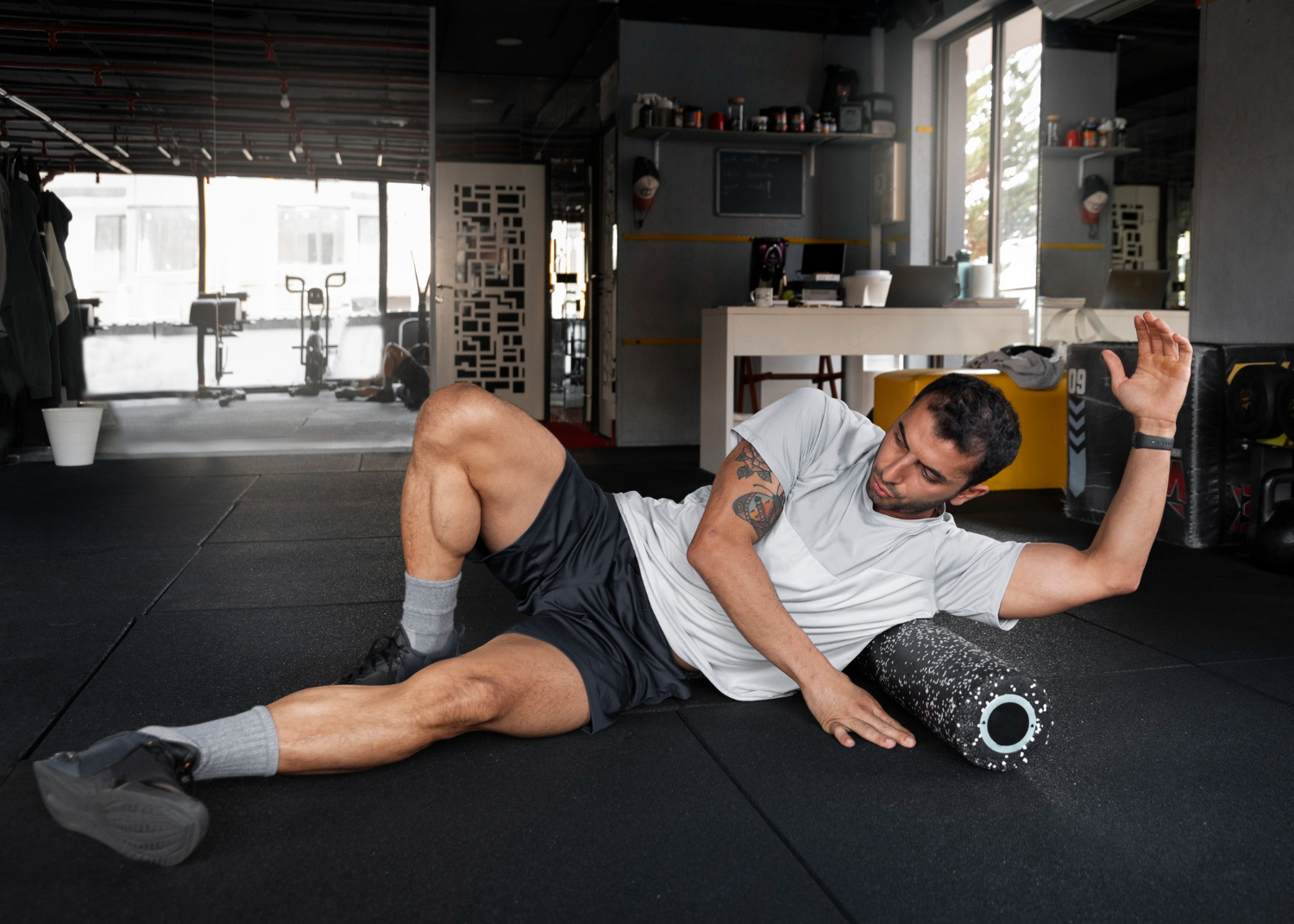
If recovery methods had a showdown, foam rolling and stretching would be the heavyweights in the ring. Both claim to ease sore muscles, improve flexibility, and get you back into the gym faster. But here’s the thing: not all recovery methods are created equal, and I’ve spent plenty of time testing both to figure out which actually helps me bounce back better.
So, let’s break it down ,my personal experience, the science behind each, and when I reach for one over the other.
Round 1: The Case for Foam Rolling
The first time I saw someone foam rolling, I honestly thought they were just torturing themselves with a giant piece of plastic. But curiosity got the better of me, and I gave it a shot after a brutal leg day. The pain was sharp, almost unbearable at first ,but then something weird happened. The soreness started melting away.
Foam rolling works by applying pressure to tight muscles and fascia (that web of connective tissue around your muscles). Think of it as a deep tissue massage you give yourself. After a few weeks of consistent rolling, I noticed:
- My quads felt looser before squats.
- My hamstrings didn’t feel like steel cables.
- Post-workout stiffness faded faster.
The biggest benefit? Improved blood flow. After foam rolling, my muscles feel warm and primed, which speeds up recovery and makes me less likely to skip my next workout out of soreness.
Round 2: The Case for Stretching
Stretching has been around forever, and for good reason. Unlike foam rolling, stretching doesn’t just target soreness ,it improves flexibility and mobility.
I’ll admit, I used to skip stretching because I was impatient to get out of the gym. But when my hips and shoulders started limiting my lifts, I had no choice but to take it seriously. Over time, consistent stretching gave me:
- Deeper squats without pain.
- Better overhead mobility for presses.
- Relief from lower back tightness after long days at a desk.
Stretching is especially effective for long-term mobility gains. Where foam rolling gives me immediate relief, stretching reshapes how my body moves over weeks and months.
Round 3: Head-to-Head
Here’s how I see it after years of experimenting:
- For instant relief: Foam rolling wins. When my legs are trashed from lunges or deadlifts, rolling them out for 5–10 minutes gives me immediate freedom of movement.
- For long-term performance: Stretching takes the crown. It doesn’t always feel like it’s “working” in the moment, but the cumulative effect on mobility and injury prevention is huge.
- For recovery speed: Both matter. Foam rolling increases circulation (great for flushing out soreness), while stretching keeps my muscles balanced so I don’t overload one area and set myself up for injury.
My Personal Routine
What’s worked best for me is combining both in the right order. After intense training, I start with foam rolling to break down tightness and get blood flowing. Then I move into dynamic stretches (like hip openers, thoracic twists, or hamstring stretches) to reinforce mobility.
On rest days, I’ll do a full 20-minute stretch session ,no foam roller, just slow, deep holds. That’s when I notice the biggest improvements in my flexibility and posture.
The Verdict
So, which one helps you heal better? Honestly, it’s not an either/or answer. Foam rolling is like the quick fix ,a pain reliever that loosens me up right away. Stretching is the long game ,it keeps my body moving well and prevents those little aches from turning into injuries.
If you’re serious about recovery, don’t pick sides. Use both as tools in your arsenal. Roll out when you’re sore, stretch when you want to move better, and combine them for the best of both worlds.
At the end of the day, recovery isn’t about choosing one “magic method.” It’s about listening to your body and giving it what it needs ,sometimes that’s a roller, sometimes it’s a good stretch, and sometimes, let’s be honest, it’s just a nap.
